Thursday, 15 October 2015

Review of Crysis 3

Images taken from http://www.supercheats.com/crysis-3/walkthrough/mission-3-the-root-of-all-evil, http://www.notebookcheck.net/Crysis-3-Benchmarked.89410.0.html, http://fpsgeneral.com/site-images/crysis-3, http://www.pcgamer.com/crytek-next-gen-consoles-pc/ , http://theco-operatives.com/review/crysis-3/, http://www.playstationbit.com/ps3/crysis-3-recensione/attachment/crysis-3-multiplayer-beta-gameplay-tutorial-introduces-hunter-crash-site-modes, http://uk.ign.com/wikis/crysis-3/File%3ACapture_the_relay1.bmp, http://uk.ign.com/wikis/crysis-3/Capture_the_Relay


Single Player Review of Crysis 3


Crysis 3's Single player campaign takes place 20 years after the CEPH's defeat in Crysis 2 and the protagonist has been put into cold storage by CELL. CELL have taken over the power vacuum left by the CEPH in Crysis 2. The protagonist is Prophet, the last Nano suited soldier in the world. The story starts as you having to take down CELL from the inside of New York 2.0, which is where they are making power to control the world. As the story advances, you find out that the CEPH haven't been defeated and are preparing to take over the world. The story advances in this fashion.


Crysis 3 - The last nanosuit soldier on the planet.


To help you to save the world, You have multiple unique abilities and weapons you can use. The nanovision goggles allow you to see enemies and mark them on your HUD, they also have an infrared mode that allows to see through walls, but it uses up energy.


Crysis 3 - why need eyes when you have this


The customization mode is good for when you need a different type of weapon or mode to get through. The cloak mode the suit allows you to use, turns you completely invisible but the more energy you use depend on how fast you are moving.
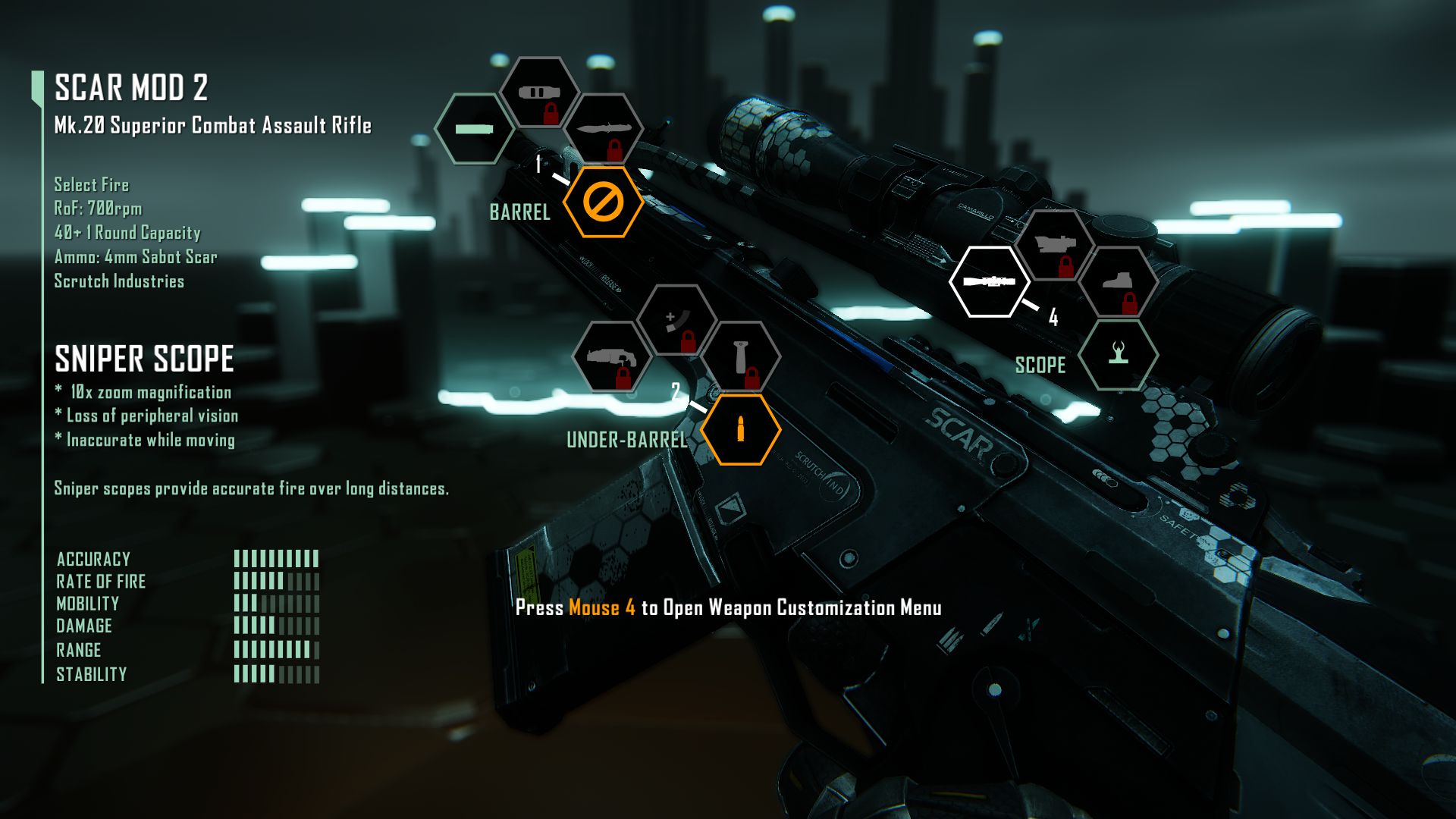


Crysis 3 - Why choose at the start of the battle when you can do it in the middle of the battle.


This allows good stealth kills and gives you a chance to get out of a firefight. The Bow is another awesome weapon in Prophet's fight against CELL and the CEPH forces. It is completely silent and kills normal soldiers in one hit. You can also change the arrow type and the drawstring pull so you can have a really slow pull that can pin enemies to walls or fast pull so you fire arrows quick and fast. The Bow is set so you can use smart, thermite and shock arrows in it apart from the normal arrows. Smart arrows will auto track and fire small explosives which will follow the enemies, Thermite arrows are just explosive arrows and shock arrows allow for you to kill large groups of enemies that are all together.


Crysis 3 - WHAT? You can't see me


The armor mode allows you to take extra damage that doesn't go from your health. The premise is that the damage that you take gets taken away from your energy.


Crysis 3 armor mode


Crysis 3- What? You're not getting through me


Every level you play has a open worldly type environment with optional objectives if you want to do them, and these might give you a achievement and trophy or a upgrade module to level up prophet.


At the time of writing, On the Xbox 360, which is what I'm reviewing it on, The frame rate takes a massive dive into the ocean when checkpointing and it's extremely easy to see when you play. The AI is stupid and if you walk in front of them while cloaked, they just stumble back and run away in fear but that is what is expected from the basic First Person Shooter AI that are programmed into these games. The graphics are `Meh`. They are Ok but they are not a big improvement over Crysis 2 but the game is nicely textured and the
voice acting is matching the past game plus adding new characters' personality to make you get involved with the story. The story is set in New York 20 years after Crysis 2 so the environment and scenery makes it look ruined and broken compared to new York in Crysis 2.


Crysis 3 - This is new York 2.0, just take it in.


CELL have also have set up shop in new York 2.0 so you'll see guard towers and a hydro dam power station that you have to destroy in the campaign. It's only about a 4 mission campaign but that adds to over 10 hours of gameplay which isn't bad for a £60 game at release.


Overall: A nice campaign that works on it's success of the other game sequels but doesn't delve into any new themes and features.
 
Plus points : Updated Graphics, Customization mode on the fly, The story and 3D ready game.


Negative points: Bow, Reused setting, Frame rate drop when checkpointing and stupid AI.


Overall score for Campaign 7/10


---------------------------------------------------------------------------------------------------------------


Crysis 3 Multiplayer

Crysis 3 has a generic multiplayer mode that most games have to have to be successful these days. It has a create a class so you can make your own custom guns and whatever you want in your loadout. In addition to this, you get Nanosuit modules that you can customize your class with. Here is some examples: Auto armor which instantly activates armor when taking damage, Rapid Fire that improves the fire rate of all your weapons and Phantom, which allows you to cloak and uncloak faster. All these modules can be upgraded by getting 200 kills for rank 2 and 500 kills for the maximum rank 3.


Crysis 3 - Why make your own class when you can have the overpowered preset classes

There is challenges that you can perform to get more XP, such as social challenges, weapon challenges and squad challenges. Squad and social challenges only give XP and dog tag backgrounds for your dog tag. The weapon challenges give XP and weapon attachments when completed. These could be classed as kill 25 people with a shotgun to get 1000 XP and a long barrel for more range and damage.

Out of the game modes I played, it has the usual modes that you would expect but when I started playing the multiplayer, I was expecting battlefield style gameplay not call of duty. Here is a rundown of the gamemodes:

Team Deathmatch: This is your standard team vs. team to see what team can get 100 kills or points first or the team with the most points win.


Crysis 3 - When you work together, you can do anything.

Deathmatch: This is your standard Free for all to see who can get 50 points first or whoever gets the most points at the end of the time.


Capture The Spear: This is a standard Domination, Capture A,B and C and then keep control until your team or other team gets 100 points.


Crysis 3 - What do these things do?


Capture the Relay: This is your basic Capture the Flag objective game mode. One relay is located at each team's base. Players much grab the enemy team's relay and bring it back to their relay to score one point. A point can only be scored if the team's relay is still at the base. The team with the most points at the end of the two rounds wins the game. Each round lasts Seven Minutes and 30 Seconds (7:30).
Grabbing a relay from the enemy team will earn the player 100 XP. While the relay is being held, only the
Secondary Weapon can be used. The relay can be manually dropped and picked up at any time. 250 XP will be earned once the relay has been captured.
To take back a relay, players must kill the one who stole it and pick it up to instantly send it back to their base. A small red “Kill” icon will be located over the head of the player who stole the relay while it's in their possession. This icon will refresh the location every two seconds.
If a friendly player stole the relay from the enemy team, a small teal “Escort” icon will be located over the player's head. This icon will not need location refreshing.


Crysis 3 - You need the relay, don't know why.

Hunter: Hunter is the gamemode that EA showed off at E3 and other events. It was apparently different to anything that we had ever seen in a FPS and after playing one match of it , I can tell you that it is infected from Call of Duty. When you are the Hunter, you kill the CELL operatives and the CELL operatives that have died turn into Hunters themselves. The match ends when all CELL operatives are dead or if at least one of them is still alive after the 5 minute time limit.


Crysis 3 - Hunting hasn't ever been so easy

Medley: Where all the gamemodes are played randomly.

Maximum Team Deathmatch and Deathmatch is Team Deathmatch and Free for all with Hardcore mode rules on.


CELL vs. Rebels: Where you play all the gamemodes without the nanosuit.

The game plays very nice with the nanosuit as a main feature of the match with the super jump, Armor mode to protect you from enemy fire and Stealth mode to get kills when people can't see you. It's damn hard to kill someone as most players keep armor mode on just in case. It took me about 4 shotgun bullets to kill a player with armor mode up. Alien or CEPH weapons randomly spawn around the map and are super charged versions of the normal weapons that you can equip. Weapons such as the CEPH X-Tech mortar which fires a super charged Rocket Blast that can kill in one hit. When you die, you lose the weapon as it's not one of your equipped weapons in your class. If you're not a very good player, Deathstreaks can help you as when you die more than 4 times without getting a kill, It will give you a Armor boost or something like that. Another nice feature is the Match Camera, at the end of a match, instead of showing the last kill of the match, It shows all your kills that you performed in that match. It is nice to see a multiplayer that will show your kills rather than the final kill of the match.

Here come the bad comments now so be warned:


The auto regeneration is too quick, you maybe on the verge of killing someone but if you take cover for 2 seconds, you regenerate full health and armor and kill that person. The hit detection is terrible, I was fighting a enemy with a Alien flamethrower and was getting killed by it but I died to a stray bullet from a enemy on the other side of the map. The textures sometimes don't load up and load up the textures when you spawn. It's very rare that you can survive the 5 minutes given by the game as a CELL operatives and Matchmaking is terrible, I, a level 5 player put in with a level 31 player. The matchmaking makes no sense.

Overall, a very solid multiplayer that people may want to keep playing, a ton of multiplayer maps and gamemodes to play.


Review for multiplayer 6/10

Game Reviewed: Crysis 3
Publisher:  EA
Developer: Crytek
Price:£ 19.99
System: XBOX 360


Review by Kieran Parker

---------------------------------------------------------------------------------------------------------------


Single Player Review of Crysis 3

Images taken from http://www.supercheats.com/crysis-3/walkthrough/mission-3-the-root-of-all-evil, http://www.notebookcheck.net/Crysis-3-Benchmarked.89410.0.html, http://fpsgeneral.com/site-images/crysis-3, http://www.pcgamer.com/crytek-next-gen-consoles-pc/

Single Player Review of Crysis 3

Crysis 3's Single player campaign takes place 20 years after the CEPH's defeat in Crysis 2 and the protagonist has been put into cold storage by CELL. CELL have taken over the power vacuum left by the CEPH in Crysis 2. The protagonist is Prophet, the last Nano suited soldier in the world. The story starts as you having to take down CELL from the inside of New York 2.0, which is where they are making power to control the world. As the story advances, you find out that the CEPH haven't been defeated and are preparing to take over the world. The story advances in this fashion.


Crysis 3 - The last nanosuit soldier on the planet.

To help you to save the world, You have multiple unique abilities and weapons you can use. The nanovision goggles allow you to see enemies and mark them on your HUD, they also have an infrared mode that allows to see through walls, but it uses up energy.


Crysis 3 - why need eyes when you have this


The customization mode is good for when you need a different type of weapon or mode to get through. The cloak mode the suit allows you to use, turns you completely invisible but the more energy you use depend on how fast you are moving.


Crysis 3 - Why choose at the start of the battle when you can do it in the middle of the battle.

This allows good stealth kills and gives you a chance to get out of a firefight. The Bow is another awesome weapon in Prophet's fight against CELL and the CEPH forces. It is completely silent and kills normal soldiers in one hit. You can also change the arrow type and the drawstring pull so you can have a really slow pull that can pin enemies to walls or fast pull so you fire arrows quick and fast. The Bow is set so you can use smart, thermite and shock arrows in it apart from the normal arrows. Smart arrows will auto track and fire small explosives which will follow the enemies, Thermite arrows are just explosive arrows and shock arrows allow for you to kill large groups of enemies that are all together.


Crysis 3 - WHAT? You can't see me


The armor mode allows you to take extra damage that doesn't go from your health. The premise is that the damage that you take gets taken away from your energy.

Crysis 3 armor mode


Crysis 3- What? You're not getting through me


Every level you play has a open worldly type environment with optional objectives if you want to do them, and these might give you a achievement and trophy or a upgrade module to level up prophet.

At the time of writing, On the Xbox 360, which is what I'm reviewing it on, The frame rate takes a massive dive into the ocean when checkpointing and it's extremely easy to see when you play. The AI is stupid and if you walk in front of them while cloaked, they just stumble back and run away in fear but that is what is expected from the basic First Person Shooter AI that are programmed into these games. The graphics are `Meh`. They are Ok but they are not a big improvement over Crysis 2 but the game is nicely textured and the
voice acting is matching the past game plus adding new characters' personality to make you get involved with the story. The story is set in New York 20 years after Crysis 2 so the environment and scenery makes it look ruined and broken compared to new York in Crysis 2.


Crysis 3 - This is new York 2.0, just take it in.

CELL have also have set up shop in new York 2.0 so you'll see guard towers and a hydro dam power station that you have to destroy in the campaign. It's only about a 4 mission campaign but that adds to over 10 hours of gameplay which isn't bad for a £60 game at release.

Overall: A nice campaign that works on it's success of the other game sequels but doesn't delve into any new themes and features.

Plus points : Updated Graphics, Customization mode on the fly, The story and 3D ready game.

Negative points: Bow, Reused setting, Frame rate drop when checkpointing and stupid AI.

Overall score 7/10

Game Reviewed: Crysis 3
Publisher:  EA
Developer: Crytek
Price:£ 19.99
System: XBOX 360

Review by Kieran Parker

Wednesday, 14 October 2015

Multiplayer Review of Crysis 3

Crysis 3 Multiplayer

Crysis 3 has a generic multiplayer mode that most games have to have to be successful these days. It has a create a class so you can make your own custom guns and whatever you want in your loadout. In addition to this, you get Nanosuit modules that you can customize your class with. Here is some examples: Auto armor which instantly activates armor when taking damage, Rapid Fire that improves the fire rate of all your weapons and Phantom, which allows you to cloak and uncloak faster. All these modules can be upgraded by getting 200 kills for rank 2 and 500 kills for the maximum rank 3.

There is challenges that you can perform to get more XP, such as social challenges, weapon challenges and squad challenges. Squad and social challenges only give XP and dog tag backgrounds for your dog tag. The weapon challenges give XP and weapon attachments when completed. These could be classed as kill 25 people with a shotgun to get 1000 XP and a long barrel for more range and damage.

Out of the game modes I played, it has the usual modes that you would expect but when I started playing the multiplayer, I was expecting battlefield style gameplay not call of duty. Here is a rundown of the gamemodes:

Team Deathmatch: This is your standard team vs. team to see what team can get 100 kills or points first or the team with the most points win.

Deathmatch: This is your standard Free for all to see who can get 50 points first or whoever gets the most points at the end of the time.

Capture The Spear: This is a standard Domination, Capture A,B and C and then keep control until your team or other team gets 100 points.

Powercell: This is the same as Capture the Spear but Powercell has you capturing and keeping control of a Powercell until your team reaches the 200 limit to end the match.

Hunter: Hunter is the gamemode that EA showed off at E3 and other events. It was apparently different to anything that we had ever seen in a FPS and after playing one match of it , I can tell you that it is infected from Call of Duty. When you are the Hunter, you kill the CELL operatives and the CELL operatives that have died turn into Hunters themselves. The match ends when all CELL operatives are dead or if at least one of them is still alive after the 5 minute time limit.

Medley: Where all the gamemodes are played randomly.

Maximum Team Deathmatch and Deathmatch is Team Deathmatch and Free for all with Hardcore mode rules on.

CELL vs. Rebels: Where you play all the gamemodes without the nanosuit.

The game plays very nice with the nanosuit as a main feature of the match with the super jump, Armor mode to protect you from enemy fire and Stealth mode to get kills when people can't see you. It's damn hard to kill someone as most players keep armor mode on just in case. It took me about 4 shotgun bullets to kill a player with armor mode up. Alien or CEPH weapons randomly spawn around the map and are super charged versions of the normal weapons that you can equip. Weapons such as the CEPH X-Tech mortar which fires a super charged Rocket Blast that can kill in one hit. When you die, you lose the weapon as it's not one of your equipped weapons in your class. If you're not a very good player, Deathstreaks can help you as when you die more than 4 times without getting a kill, It will give you a Armor boost or something like that. Another nice feature is the Match Camera, at the end of a match, instead of showing the last kill of the match, It shows all your kills that you performed in that match. It is nice to see a multiplayer that will show your kills rather than the final kill of the match.

Here come the bad comments now so be warned:

The auto regeneration is too quick, you maybe on the verge of killing someone but if you take cover for 2 seconds, you regenerate full health and armor and kill that person. The hit detection is terrible, I was fighting a enemy with a Alien flamethrower and was getting killed by it but I died to a stray bullet from a enemy on the other side of the map. The textures sometimes don't load up and load up the textures when you spawn. It's very rare that you can survive the 5 minutes given by the game as a CELL operatives and Matchmaking is terrible, I, a level 5 player put in with a level 31 player. The matchmaking makes no sense.

Overall, a very solid multiplayer that people may want to keep playing, a ton of multiplayer maps and gamemodes to play.

Review 6/10

Review by Kieran Parker


Tuesday, 13 October 2015

Example review script to be a possible script idea for the animated review


Taken from
http://metro.co.uk/2015/10/12/disgaea-5-alliance-of-vengeance-review-no-joke-5434466/

Disgaea 5: Alliance Of Vengeance review – no joke


The world’s only comedy tactical role-player comes to the PS4, but does it have enough new ideas, and enough new jokes, to be worthwhile?
As far as many people are concerned Final Fantasy Tactics is the definitive tactical role-playing game. It was one of the first games of its type to get a big push in the West and it was a solid game too, relatively accessible and packed with content. But it took itself so darned seriously. The Disgaea games are not only better but they’re funnier too. Although this sequel doesn’t maintain that mixture as well as some of the previous games.
It’s now over 12 years since the original Disgaea was released. The majority of the sequels have been very good, and most have offered clear improvements over the original gameplay, and yet none of them have ever matched the quality of the first game’s cast and storyline. All the games are funny but they show the strain of fighting against the law of diminishing returns, with scripts that are never quite as sharp or endearing as the original.


2011’s Disgaea 4 did come close to outshining its progenitor, but Disgaea 5 is a definite step backwards. The problem is lead character Killia, a tediously clichéd anime style anti-hero whose voice actor seems as disinterested in his petulant attitude and secretive backstory as we were. The brattish princess Seraphina is a lot more fun but equally unoriginal in her way, and although there are some fun supporting characters – such as semi-pacifist bunny queen Usalia – the script is considerably less interesting in terms of both comedy and the more serious elements.
The actual plot is, of course, complete tosh, as you fight over a multiverse of Netherworlds instead of just one. That weakness doesn’t matter so much though, and in terms of the actual combat the game is certainly much more interesting.
As ever, battles are resolved on an isometric map, on which you and your opponents take turns to move and attack. Unlike most similar games your whole team can take their go at once, executing their moves whenever they want – before it’s your opponent’s turn to do the same. The position of allies is particularly vital, as placing them close together allows them to use team attacks or chain together combos. This is key to not only beating tough bad guys but also earning bonus items from each map.


This is pretty much the same as the game’s worked for the last several sequels. And while it is true that Disgaea 5’s gameplay is an improvement on the last entry, it only counts as such thanks to a number of minor refinements rather than any major new features.
There’s always a big abstract gimmick in the Disgaea games but this time round it’s basically just Geo Panels again: coloured grid squares which cast various modifiers on whoever stands on them. Evilties are also an existing concept and these grant additional buffs, from simply increasing defence to Seraphina doing more damage against men.
What is new though is the Revenge system, which gives a boost to other characters if one of your allies is killed. One of the last major features to be introduced, about 10 hours in, is support squads that grant special bonuses or abilities to each of the group, such as capturing and recruiting enemies to your cause.
One problem Disgaea has never had is value for money and that’s especially true of this sequel. But it’s almost too much, with more than enough to keep you going until the next sequel. And we don’t mean that as any kind of exaggeration. Like many a role-player, tactical or otherwise, Disgaea relies on a lot of level grinding, although its trick has always been to make it feel like a fun optional extra rather than an enforced necessity.


The infamous Item World, where you can journey into any object to increase its effectiveness, is now much expanded and features more random events. But there’s also now a Character World, which plays like a sort of Mario Party style board game, and much more detailed character customisation in general – from simply changing people’s names to their skills and personality types.
As the first of the series on the PlayStation 4 this is only a minor improvement on the last game, but given the modest budget and wealth of content that’s a minor criticism. There are some obviously reused assets from the PlayStation 3 but the higher resolution sprites, and some fluid animation, can still make it an attractive-looking game.
Whether it’s attractive to ordinary gamers though is another thing entirely. In some ways this is the best of the series, and despite the mountain of options and features it is reasonably accessible. If only because it takes several hours to introduce everything.
But despite being a better game on paper none of Disgaea’s improvements feel very exciting or innovative while you’re actually planning. We’re still tempted to just recommend playing the first game and graduating to this and the other sequels if you enjoy that. The gameplay’s a lot more basic but on the flipside the characters are a lot more fun, and if you’re staying in their company for 100+ hours it does help if you like them.

Disgaea 5: Alliance Of Vengeance

In Short: The least funny Disgaea yet, but arguably the best in terms of the actual gameplay – even if there is a lack of genuinely new ideas.
Pros: A huge depth of options in terms of the combat itself and the character and customisation, but all of it is introduced in a sensibly controlled manner. Some nice 2D animation.
Cons: The script and characters are amongst the least interesting in the series, and Killia in particular is a real bore. A lack of major new ideas and a built-in reliance on level grinding.
Score: 7/10
Formats: PlayStation 4
Price: £54.99
Publisher: NIS America
Developer: Nippon Ichi Software
Release Date: 16th October 2015
Age Rating: 12


Read more: http://metro.co.uk/2015/10/12/disgaea-5-alliance-of-vengeance-review-no-joke-5434466/#ixzz3oSGsbBoL

Example Review for possible script Ideas

Taken from http://www.gamespot.com/reviews/transformers-devastation-review/1900-6416275/


Transformers: Devastation Review
  • First Released
    released
  •               
  • Reviewed Oct 10, 2015
Nostalgia can be a cruel and misleading force. The part of our brain that wants desperately to relive our past experiences can sometimes trick us into eagerly consuming games and books and movies that ultimately turn out to be crassly recycled garbage merely masquerading as the thing we once loved. Thankfully, Transformers: Devastation spares us this hurtful indignity. Rather than vaguely imitating certain superficial aspects of the franchise, Devastation recaptures its spirit and presents it anew. The overall experience is shallow and imperfect, but it also delivers the frenetic fun of the original cartoon in a way anyone could appreciate, not just the franchise's most devout fans.
Even just looking at Devastation feels fun. Its cel-shaded world is steeped in bold, saturated hues that perfectly suit the subject matter. Action sequences explode with bursts of color, characters move with dramatic speed blurs, hard black outlines frame every object the way they might in a comic book--essentially, every loving detail perfectly conveys the vibe of a classic Saturday morning cartoon, as does the story.
Megatron has teamed up with the Constructicons, and they're once again wreaking havoc because, like, they're bad and stuff. The narrative is utterly simplistic in a "Suitable for ages 8 and up" kind of way, but there's something oddly comforting about its absolute moral clarity. The villains are evil, the good guys are noble, and friendship wins the day. In essence, it's a story for kids that pulled a neat trick by making me feel like a kid again. There's only about as much story content as you'd expect from a three episode arc of the show, but honestly, that's enough. It hits the high notes and cuts all the filler. Fans will be served, and everyone else will be entertained.


Besides, the real star here is the flashy, dynamic combat. Devastation was developed by famed Japanese studio PlatinumGames, and it shows. The gameplay evokes shades of Vanquish and Bayonetta’s flashy, fast-paced, combo-driven madness, only simplified and streamlined. As with most contemporary third-person action games, you have light and heavy attacks that can be strung into combos. At the end of each successfully executed combo, you'll see a button prompt for a powerful "vehicle attack." After that, you can dodge your opponent's next move, triggering a brief moment of slow motion that allows you start the process all over again.
Megatron wants to turn Earth into a new Cybertron. We must stop him!

Action not only looks and feels satisfying, it also requires a keen sense of timing. Should you fail to activate your vehicle attack in time, your surprisingly formidable opponents won't hesitate to break your rhythm and beat the crap out of you for a while. That risk of failure creates a genuine feeling of reward, on top of the visceral joy and empowerment that comes with pummeling bad guys with effortless style. All this satisfaction is further amplified when you're able to implement other combat techniques like launchers/aerial combos or ranged attacks just to add a little variety. The well of options runs impressively deep--assuming you're willing to hunt around in menus to learn the ins and outs of each character--and like Platinum’s other games, this depth allows for a welcome sense of creativity and self-directed challenge.
Those characters, by the way, are of course the iconic Autobots. Following a relatively short introductory segment, you can choose to play as Optimus Prime, Bumblebee, Sideswipe, Wheeljack, or even goofy robotic T. rex Grimlock during any of the campaign's missions. While these characters aren't hugely distinct, they're far more than simple pallette swaps. Optimus moves a bit slower but deals more damage, Bumblebee has greater agility and can more easily link vehicle attacks--you get the idea. Your character choice won't drastically alter your experience, but you can at least pick the Autobot that best suits your gameplay preferences.
You can also outfit each bot with upgradable weapons and technology built from loot you gather in game, although this component may be Devastation's biggest misstep. The idea of combining two weapons to make one stronger weapon is, fundamentally, pretty cool, but the whole system is poorly explained and needlessly convoluted. Worse still, nothing I created ever seemed to impact the gameplay in any material way, rendering both the weapon system and in-game loot hunting pointless. The gameplay remains fun regardless, but a feature that could have really enhanced the experience instead just sits there unused.


Unfortunately, Devastation suffers from other issues beyond a half-baked loot system. Some--like slightly overpowered weapons and poorly communicated mission information--are negligible, and to the game's credit, it's generally pretty clever about concealing its flaws. For example, the beautiful characters models and fluid animations make the bland, repetitive environments and ugly textures easier to ignore. The frequent and diverse boss encounters distract from the otherwise rote, unimaginative, and oft-repeated mission objectives.
Other issues, however, are unavoidable, the largest of which is a simple lack of depth and content. There's just not that much game here. The campaign lasts roughly six hours and offers only limited replay value. The only additional mode is a series of challenges that mirror the campaign's empty side quests. I mean let's face it, "Kill all these enemies within this time limit" is not a real mission. You can rove around the hub city within the campaign, but rather than feeling open, it's a weird maze of tight, samey looking corridors littered with lazy invisible walls. Plus, given the pointlessness of the aforementioned crafting system, there isn't much incentive for exploration.
The frequent and diverse boss encounters distract from the otherwise rote, unimaginative, and oft-repeated mission objectives.
Still, the thought of simply beating up a bunch of slick-looking robots for a few hours is plenty appealing on its own. Devastation leverages the Transformers license masterfully and delivers tight, satisfying action with incredible flair. Honestly, I had fun just driving around trying to do donuts, and at one point, I randomly picked up a taxi and threw it over a building just for laughs. That's pretty great. And when that perfect rockin' soundtrack kicks in as you face off against Megatron, that's even better.

Example review for possible review script


Taken From http://uk.ign.com/articles/2015/10/13/minecraft-story-mode-episode-1-the-order-of-the-stone-review


Minecraft: Story Mode Episode 1: The Order of the Stone Review

158


Light on gameplay, but lots of heart.


Episode 1 of Minecraft: Story Mode feels more like Telltale’s The Walking Dead than you might guess. You’ll make tough choices about which members of your group stay and which go, mediate disputes, and yes, you’ll even fend off zombies. Of course, Story Mode’s family-friendly adventure replaces Walking Dead’s despair with a lighthearted sense of humor and camaraderie, written with a lot of heart that kept me invested in this story and its mysteries.
At first, the world is a mystery in of itself. We play as Jesse, the heart of a group of friends and aspiring builders. As for what it means to be a builder in the world of Minecraft: Story Mode? I couldn’t tell you, because almost no time is spent on introducing us to Telltale’s take on Minecraft’s inherently blank-slate universe in Episode 1. Instead we’re quickly tossed directly into the drama. Ten extra minutes of opening scenes devoted to who these friends are, where they live, and other worldbuilding or character moments would have gone a long way towards orienting me into what this blocky world is all about and what its rules are. Are they kids? Adults? Do people in this world have jobs? I’m not sure.

These concerns fade into the background once the compelling world-ending plot kicks into high gear. The themes might be heavy - death! destruction! betrayal! - but it’s all presented in more of a light, Ghostbusters-esque vibe. Jesse, faultlessly voiced by actor/comedian Patton Oswalt if you play as a male or Catherine Taber as female, perfectly balances heroics with laughs. The rest of the squad isn’t given enough screen time to grow beyond one-dimensional status, sadly. The episode’s heaviest moment comes when your group makes a discovery that forces them to question everything they’ve always believed in. Pretty heavy stuff, for a game mostly content to get by on laughs.

Big Minecraft fans will enjoy it on a much deeper level.
Telltale’s commitment to genuinely forking paths more than ever before is off to an impressive start. On my episode-closing stats screen I found out that only 29% of players had experienced a rescue sequence I assumed was mandatory. The episode ends on a heavy choice, too. Allowing me to truly navigate my own path through this adventure feels great, and does make up for some of Story Mode’s storytelling shortcomings.
Minecraft: Story Mode will work as a traditional “save the world!” adventure for just about anyone, but big Minecraft fans will be able to enjoy it on a much deeper level. Cute in-jokes like punching trees as part of a training montage, gathering nine slime to craft a slime block, and admiring a chicken-torturing device made the Minecraft fan in me smile. I especially liked the couple of time-lapse building sequences that show elaborate structures being erected, and the opportunity to “craft” story-critical items by placing them directly onto a crafting table.

Even more impressive is Story Mode’s gorgeous in-game sets. Each looks like it was painstakingly and lovingly created directly in Minecraft itself. It’s extremely authentic and impressive, with lots of huge buildings and vistas to soak in, combined with plenty of tiny street-level details when wandering around town.
Still, I wish there was more to play around with in these spaces. Minecraft’s trademark is its unrestricted freedom and interactivity, yet Story Mode Episode 1 only contains a couple true puzzles. Those that are here really work, though. They’re smartly integrated into the plot and environment, and feature clever solutions. But that isn’t enough gameplay to sustain a two-hour episode, the rest of which is made up mostly of on-rails quick time events.


The Verdict


Minecraft: Story Mode is a pleasant, family-friendly adventure that very quickly won me over and kept me invested in its twists and turns. The drama might not be as heightened as something like The Walking Dead, but I still found myself surprisingly invested in the choices I had to make about my companions, undeveloped as they may be, and smiling at the Minecrafty in-jokes. Sparse interactivity and a lack of commitment to explaining this world and its inhabitants hold Episode 1 back, but I’m still absorbed in my story, and eager to find out what happens next.

Example of the review script I may use to voice the animated review

Taken from http://www.gamereviewsystem.com/GameReviewSystem.html#


Review: Crysis 3 for the Xbox 360.

The original game was a surprise hit when it first blasted its way onto screens a while back.

Can Electronic Arts continue to stay relevant in a new world of video game publishing? Crysis 3 is here to say "...maybe?".


While it's no surprise that Activision have released a new Call of Duty game, it's nice to see that it's still capable of being the same old stuff but with more explosions and swearing and blood and other hardcore maturity things.

Pew! Pew! Pew! The aliens are back to cause havok for you and everyone you love. So it's time for you to get your spaceship and blast 'em all out of the sky. Do you have what it takes to zap the high scores and joystick all the video game nasties.


Crysis 3 tries to seperate itself from the pack with interesting features. The 3D effect works well for a while, but prlonged use may lead to some people getting eyestrain after 100 hours. Thankfully there's an option to turn it off.


Co-op features heavily in the game, but it's a shame there's no support for 72 players at once on the same couch.


Visually, Crysis 3 is a tour de force. The realistic presentation is carried across with sublime attention to detail.
Additionally, there is no faulting the environments on display. It's a testament to the graphical prowress of the Xbox 360 when its in the hands of the experienced team at some unknown.

The 3D world of Crysis 3 comes to life in a realistic way, which is nice if you're a fan of the genre.The visuals represent the objects they represent well.

Crysis 3 on the Xbox 360 looks roughly on par with other games of its type, but the aging host hardware is to blame for that more than anything else.
That being said though, everything else holds up just fine and this is a welcome addition to any die-hard gamer's library. Just don't expect to be playing it a month from now.


Overall Score: 5 / 10


This is a basis of the script that I will make for my animated review on Crysis 3

Friday, 9 October 2015

Generic codes and conventions

Taken from http://elliotrobinsmedia.blogspot.co.uk/2011/10/generic-codes-and-conventions.html


Codes and conventions Code: A system of signs which can be decoded to create meaning.

In media texts, we look at a range of different signs that can be loosely grouped into the following:
  • technical codes - all to do with the way a text is technically constructed - camera angles, framing, typography etc
  • verbal codes - everything to do with language -either written or spoken
  • symbolic codes - codes that can be decoded on a mainly connotational level - all the things which draw upon our experience and understanding of other media texts, our cultural frame of reference.
  • codes can create feelings to the audience through effects and techniques, for example rain in a film and a woman looking upset can make the audience feel bad for the woman and be emotional.
Convention:
Is what you would expect to see in a certain genre, for example: in a fantasy genred film you would expect to see maybe unicorns, demons, hero's/villians, strange settings, basically things that are fictional and unreal in our world.

The codes and conventions in media can be separated into 3 groups -
- Technical (e.g camera angles, movements & shots),
- Symbolic (e.g clothing, colours)
- Written and audio (music etc).
These three distinct groups give the text meaning and determine the response of the viewer.

Generic codes and conventions of the:

Horror genre -

Some things you would expect to see in a horror genre:
  • blood
  • villian
  • damsel in distress
  • heroic male or female
  • weapons
  • dark colours
  • scary settings
  • undead people/monsters
  • bad weather
  • sound motif (specific characters)
Horror films are uncomfortable films designed to make the audience panic, be frightened, cause dread and awareness, invoke our most hidden worst fears, capture and entertain us in an emotional cleansing movie experience, and will probally conclude with a terrifying shocking finale.

In the majority of horror films there will be a lead character/victim that will most likely survive through out the film. the killer/monster will most likely have a specific style or trademark, in the way he/she or it kills victims or causes mayhem. its usually good vs evil in most horror films. the two characters will have a conflict. usually the outcome is that the good character defeats the killer/monster or solves the problem.


Western genre -
Western films usually have the same layout, they have a good guy and a bad guy. to resemble the good from the bad the costumes of the characters depict them from each over and give the audience an understanding of who they are. for example: the good guy will wear appropriate and sensible clothes (normally in a lighter colour than the bad guy) on the other hand the villain might wear inappropriate clothing and will be usually dark colours.

Westerns often portray how desolate and hard life was for American frontier families.
Western films often depict conflicts with Native Americans.
 The Western genre sometimes portrays the conquest of the wilderness and the subordination of nature in the name of civilization or the confiscation of the territorial rights of the original inhabitants of the frontier.


Some things you would expect to see in a western genre:
  • revolvers
  • cowboys (cowboy hats)
  • saloon doors
  • tumbleweed
  • open spaces
  • desert
  • horses and maybe cows
  • spurs
  • bar brawls
  • train robberies


Science fiction -
In a science fiction film you would expect to see:
  • aliens
  • spaceships
  • rockets
  • vibrant colours
  • high advanced technology
  • abstract outfits
  • silver and metal objects
  • futuristic sound's
  • wide range of different races and species
  • lasers
  • space setting
Science Fiction is a type of genre where by the premise is that the events being described are taking place in a reality other than the one you are currently experiencing. This is either Long Time ago (Star Wars), Alternate Present (The Terminator, Twilight Zone, Independence Day) or Future (Dark Star, Silent Running). Science Fiction usually deals with hardware, technology and aliens (or other species).

Tuesday, 6 October 2015

What my production is going to be about.

What my production is going to be about

Narrative Script

My narrative script is going to be me reviewing a game called Crysis 3 which is a FPS shooter set in the Sci-Fi world of the future earth after the events of Crysis 2 when the world was under threat from aliens trying to destroy earth and the only hope is prophet, a man in a super alien power suit getting taken over by alien DNA while trying to keep the world safe.


Crysis 3 Synopsis


Setting

Players take on the role of Prophet as he returns to New York in 2047, 24 years after the events of Crysis 2. He discovers the city has been encased in a giant Nanodome created by the corrupt CELL corporation. The New York City Liberty Dome is a veritable urban rainforest teeming with overgrown trees, dense swamplands and raging rivers. Within the Liberty Dome, seven distinct and treacherous environments become known as the Seven Wonders. Prophet is said to be on a "revenge mission" after uncovering the truth behind CELL's motives for building the quarantined Nanodomes.

Plot

Twenty-four years after the events of Crysis 2, Psycho and Prophet travel around the world looking for the Alpha Ceph, the ultimate Ceph leader. However, CELL Corporation, now in search for global domination of land and technology, disable Prophet and captures all the Nanosuit soldiers, and start skinning them of their suits to recover the Ceph genetics stored in them. Running out of Nanosuit soldiers to skin, CELL transfers Prophet to a facility to skin him. Locked in a storage device, Prophet is transported to New York, now encased within a giant "Nanodome" by CELL. He is saved by a resistance force, led by Claire Fontanelli, as Prophet is the only Nanosuit holder than can stop CELL. A member of the resistance is Psycho, who is a former nanosuit holder. Psycho explains to Prophet that during his absence, CELL used Ceph technology to generate unlimited energy and gained a monopoly over the world's power supply. Those who could not pay for the energy were turn into slaves. The source of CELL's power generation for the entire world, called System X, is located in the abandoned New York. The resistance group wants System X destroyed to free the world from CELL.
After Psycho and Prophet disable Systems X's core, it turns out that System X is a system protocol designed to contain the Alpha Ceph. However, the secondary defense protocol was initiated, causing the power facility to self-destruct. The Alpha Ceph, free from containment, opens a wormhole to the Ceph homeland. They plan to send an invasion force to invade Earth through the wormhole. With the Alpha Ceph no longer dormant, the Ceph coordinator reactivates, and a coordinated Ceph attack ensues. Prophet decides to kill the Alpha Ceph and end the alien threat.
After unlocking his potential ability by removing some neural blocks in his suit, Prophet learns that CELL plans to use Archangel, a satellite-based energy distribution device that can draw power from the world's power grid, as a directed energy weapon to destroy the Alpha Ceph. Firing it would cause a chain reaction that would destroy Earth. They shut off the weapon before it unleashes enough energy to fire. Prophet, Psycho, and Fontanelli board the VTOL and engage in a massive air battle with Ceph ships, eventually crashing. Fontanelli dies in the process. Psycho, saddened by her death, laments to Prophet that he is powerless because he no longer possess a Nanosuit. Encouraged to keep fighting, Psycho, now going by his real name, Michael, finds another VTOL to take Prophet to the Ceph.
Michael and Prophet head towards the Alpha Ceph, but are bogged down by the Ceph Master Mind. Prophet finds his way through hordes of the Ceph Army and kills the Alpha Ceph. Since the Alpha Ceph controls every Ceph, its death kills all other Ceph troopers in the area. However, they do not have enough time to destroy the Ceph wormhole structure, the beam powering the wormhole pulls Prophet into space. Now in orbit around Earth, Prophet sees a massive Ceph warship, coming through the wormhole. Recalling Archangel's power, Prophet hacks into the satellite and uses it to destroy the warship. This collapses the wormhole. In the explosion, Prophet is knocked off by a debris and is pushed back into the Earth. He impacts the waters near the Lingshan Islands where 27 years ago, the events of Crysis took place.
When Prophet wakes up the next morning, he is in an abandoned hut in Lingshan. As the neural blocks were removed from the Nanosuit, the suit's outer layer was changed to reform Prophet's former physical body, resurrecting him. He walks out onto the beach and relinquishes his past by throwing his tags into the water. He then decides to use his actual name "Laurence Barnes" from then onwards. In a wide shot, the hut and surrounding beach are revealed to be the same area Nomad initially encountered during the events of Crysis


Animation - Target Audience

Taken from http://colligateanimation2.blogspot.co.uk/2011/04/target-audience.html


Target Audience


Animation films are usually considered to be children's films and can be watched by the whole family. This is because animation has a visual appeal for kids with basic characters and a simple plot that children can follow along with and enjoy. Allot of these films do cater for adults and parents as well because sometimes the stories can have a serious meaning under all the visuals and humor. For example Disney UP had humor with simple character exteriors but the story was a upsetting story of a mans journey after losing his wife which children may not fully understand the plot. Animations try to please all audiences but target children and make a film the parents can enjoy to.

But my animation will be focused towards a audience of teenagers and people that play games. They might want to know about the game that I will be reviewing.